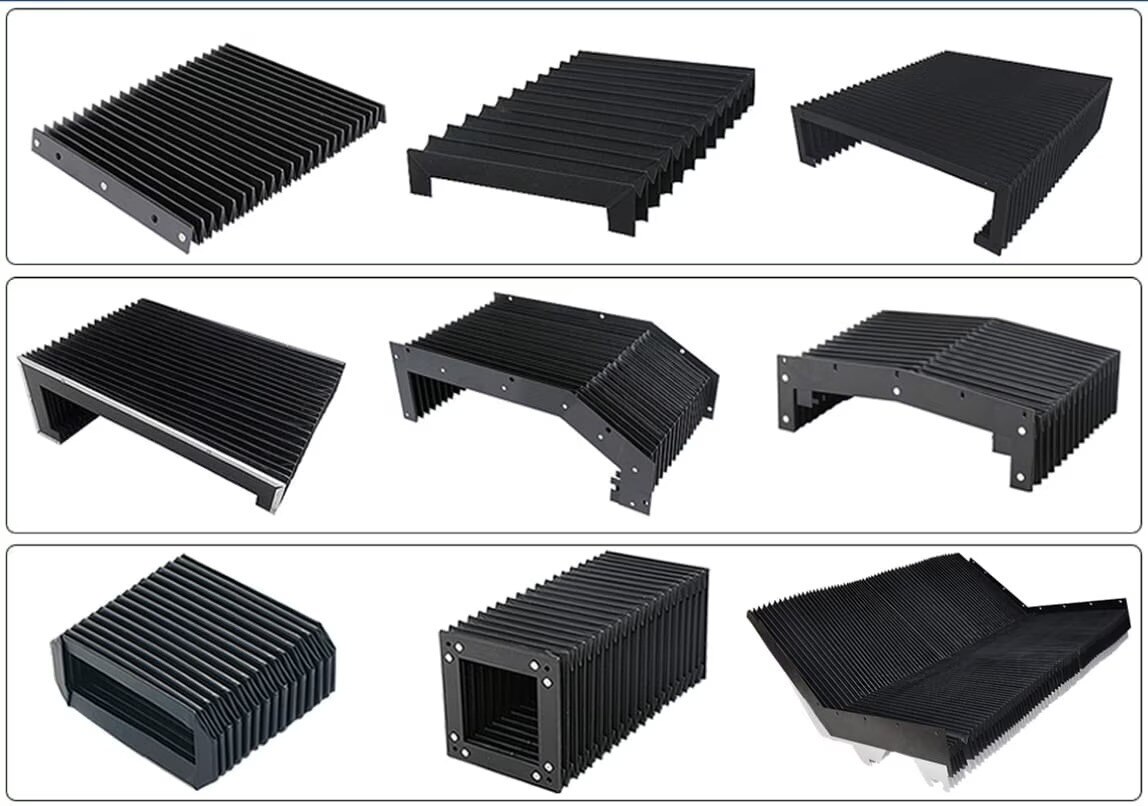
A guideway cover must match the machine axis, travel path and contamination load; a cover selected from a generic product label can restrict movement or fail under chips, coolant and repeated reversals. By the end, you will be able to identify the exposed machine areas, compare cover types, assemble the dimensions and operating data for a quotation, and check an installation before production.
Key takeaways
- Protect every exposed linear axis, including Z-axis columns and saddle ways.
- Match cover construction to chip size, coolant pressure, heat and travel geometry.
- Reject telescopic covers when debris paths or restricted space make them unreliable.
- Send travel, retracted length, height, width and mounting details to the supplier.
Which machining-centre axes need guideway protection?
Axis orientation and contamination determine the guideway cover, not the machine’s London address. Match protection to the exposed motion parts and the way chips, coolant or dust reach them.
| Machine type | Exposed motion parts | Protection focus |
|---|---|---|
| Horizontal machining centre | Linear rails, box ways, ball screws and pallet-side axis assemblies | Cover horizontal surfaces where chips fall or collect; provide drainage and chip evacuation |
| Vertical machining centre | Saddle ways, cross slides, columns and exposed Z-axis assemblies | Support vertical sections and prevent chips dropping into openings as the cover retracts |
| CNC lathe or turning centre | Cross slides, compound slides, guideways and ballscrews | Seal against turning swarf, coolant and stringy chips around the tool-slide area |
| Grinding machine | Linear ways, slides and enclosed axis parts | Use protection suited to abrasive dust and fine slurry, not a coarse-chip design |
| Multi-axis machine | Rotary tables, tilting heads, telescoping columns and intersecting travel paths | Check compact clearances, changing orientations and collisions between covers |
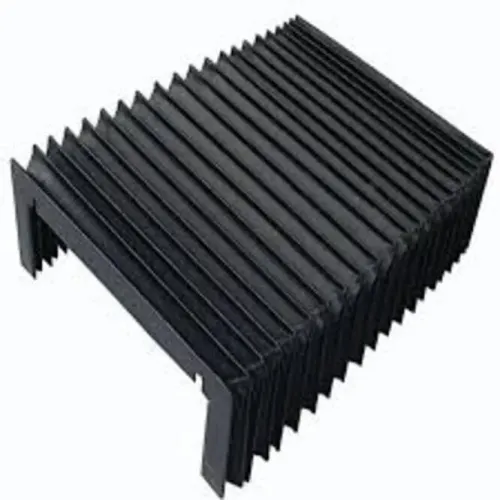
A telescopic steel cover suits heavy chips and aggressive cutting on many horizontal or vertical axes. Bellows, roll-up covers or apron covers fit low-mass, compact or unusual geometries when their materials and movement envelope match the contamination.
A guideway cover shields rails, ways and ballscrews; an energy-chain cable carrier controls the bend path of cables, hoses and tubing. They can share space but need separate checks. “guideway protection london” and “guideway cover applications london” describe procurement searches, not machine classifications.
Use the machine drawing, travel, speed, coolant and chip description to specify the cover.
How should cover type change with chips, coolant and geometry?
Match the cover to the contamination first, then check whether its movement suits the axis. Telescopic steel is the stronger starting point for heavy cast-iron chips, hot swarf, aggressive cutting and horizontal or vertical machine-tool axes.
| Option | Best fit | Critical checks |
|---|---|---|
| Telescopic steel | Heavy chips, hot swarf and long machine-tool travel | Provide roof drainage and chip evacuation on horizontal axes; support sections against gravity on vertical axes; prevent debris entering nested boxes |
| Bellows | Low-mass axes, short envelopes and unusual shapes | Match fabric, coating, fold construction, temperature limit and minimum bend radius to the coolant and chips |
| Roll-up | Restricted storage space | Confirm the travel path, roller position and retraction clearance |
| Apron | Simple openings that aluminium strips can span | Check strip overlap, fabric base and resistance to impact |
| Wipers or scrapers | Exposed ways with limited contamination | Set material, geometry and preload for reliable wiping without excessive friction |
Flood coolant, through-spindle coolant and external jets impose different loads. Give the guideway cover supplier London details of coolant type, concentration, pressure, temperature and spray direction; “coolant-resistant” alone is not a specification.
Hot, sharp or stringy swarf needs separate treatment. It can cut fabric, damage coatings and adhesive joints, bridge telescopic sections or wrap around moving parts. Excessive wiper preload increases drive load; insufficient preload lets coolant and abrasive fines pass beneath the edge.
These checks matter whether you are specifying a machine cover for machining centres London or comparing a retrofit for an existing axis.
When is a telescopic cover the wrong choice?
Reject a telescopic cover when the axis cannot provide enough space for its closed length, fixed sections and mounting overlap. A short envelope leaves no room for nesting, so the cover can strike the machine before reaching the end of travel.
Choose another arrangement when the travel path is non-linear or unusual geometry prevents sections from nesting without collision. Static clearance at each end is not enough; check the changing shape through the complete cycle.
| Option | Main advantage | Reject telescopic design when |
|---|---|---|
| Bellows | Low mass and tight bending | The axis needs a flexible path or has little storage space |
| Roll-up cover | Compact storage | A roller can fit where nested sections cannot |
| Exposed-way wipers | Visibility and frequent access | Contamination is light and a full barrier is unnecessary |
Wipers do not provide the same protection as a fully enclosed cover. They are a poor choice for heavy swarf, abrasive dust or flood coolant.
Prioritise access and visibility if operators must inspect lubrication points, probes, tooling or the guideway during setup. Confirm that the cover leaves room for:
- Tool changes and pallet changes
- Probing, manual cleaning and lubrication
- Access to inspection points without entering the moving envelope
A guideway cover is not a replacement for the machine perimeter enclosure, interlocked doors or access guarding. Apply ISO 12100 to risk assessment and risk reduction, ISO 14120 to guard requirements, and PUWER 1998 to the installed equipment’s suitability, maintenance, inspection and guarding.
Guideway protection London is a procurement phrase, not a reason to force one design onto every axis.
What dimensions and motion data should you send to a supplier?
Nominal axis stroke is not enough: overlap, nested sections and fixed sections can make the cover substantially longer than the protected travel. A technically comparable quotation needs a dimensioned drawing, not only “guideway cover for machining centres London” or “guideway cover supplier London”.
- State required travel or stroke, fully closed length, fully extended length, cover width, cover height, number of telescopic boxes or bellows folds, fixed-section length and mounting-face pattern.
- Show clearances at both ends of travel and the available envelope above, below and beside the axis. Allow for changing shape, section overlap and nesting; a static end view misses collisions during movement.
- Give actual maximum speed, acceleration, cycle frequency, reversal pattern, vibration and impact exposure.
- Describe chip material and form, including cast iron, aluminium, abrasive dust and stringy swarf. Add chip temperature, because hot swarf can damage fabrics, coatings, wipers and adhesive joints.
- Specify coolant type, concentration, pressure, temperature and spray direction, plus ambient temperature and the cleaning method.
- State required service life and identify any cable carrier or hose route sharing the space. For a flexible cover, give the required bend radius.
- Supply a machine drawing or 3D envelope, photographs, mounting details and images of any existing failure.
- Take photographs from outside the moving envelope. Do not place a person or measuring tool inside it; use fixed datums and a controlled inspection method instead.
How do you inspect, install and maintain the cover safely?
Use a four-stage verification sequence: isolate, measure, test, then maintain.
1. Isolate the machine under its established lockout procedure. Identify every axis position, tool-change position, pallet-change position and service access point before removing or fitting the cover. Measure from fixed machine datums, never from a moving cover, and mark the closed and extended positions.
2. Check that the cover remains outside the moving envelope through the complete cycle, not only at each travel limit. Inspect mounting faces, fasteners, wiper contact, drainage and chip discharge, then check clearance from cable carriers, hoses, lubrication lines and probes.
3. Commission the machine at low axis speed before applying the programmed acceleration, reversals and full travel. Stop for section collision, resonance, fold fatigue, abnormal drive load, coolant ingress or swarf entering the guideway. Include tool changes, pallet changes, probing, lubrication access and manual-cleaning positions.
4. During maintenance, remove packed chips before they transmit excess load into the cover or guideway. Inspect wipers and fasteners, examine telescopic sections for distortion and folds for damage, then verify free movement before returning the machine to production.
Give a guideway cover supplier London a drawing, motion profile, contamination details, mounting information and failure photographs; “machine cover for machining centres London” is not enough for a comparable quotation. SCUTES INDIA PRIVATE LIMITED can use that package to distinguish a replacement, retrofit or new-build requirement, while the buyer retains final machine-level validation under PUWER.
Related products
 | TELESCOPIC COVERS A telescopic cover protects guide-way surfaces and components of moving axis of machines. View product → |
 | Machine Covers Machine covers are specially designed shields used to protect industrial equipment and machinery from environmental elements. View product → |
Frequently asked questions
Which machining-centre axes need guideway protection?
Protect any exposed linear guideway or moving machine part that can receive chips, coolant, oil or dust. Check X-, Y- and Z-axis ways, column-mounted Z axes, saddle ways and auxiliary slides rather than selecting protection from axis labels alone.
How should cover type change with chips, coolant and geometry?
Choose construction and sealing around the actual contamination and movement pattern. Large hot chips, high-pressure coolant, fine dust, vertical travel, tilted surfaces and tight clearances each affect the suitable cover design.
When is a telescopic cover the wrong choice?
A telescopic cover is a poor fit when debris can lodge between sections, coolant can pool, the retracted package cannot fit, or the required travel and speed exceed its practical geometry. Compare bellows and other protection designs before specifying it.
What dimensions and motion data should you send to a supplier?
Provide axis travel, speed, acceleration, working and retracted lengths, cover width and height, mounting-hole positions, clearances, guideway orientation, temperature, coolant type, chip conditions and photographs or drawings of the installation.
How do you inspect, install and maintain the cover safely?
Lock out the machine before inspection or installation. Check mounting alignment, free travel, seals, folds or telescopic sections, fasteners, wipers and drainage; remove chips and residue without damaging the cover or forcing its movement.
Related products
 | TELESCOPIC SPRING COVER Telescopic Spring Covers provide protection under extreme conditions. View product → |
 | Roll Up Cover A roll-up cover is a highly durable and flexible protective solution designed to safeguard machinery, equipment, and valuable assets from dust,... View product → |
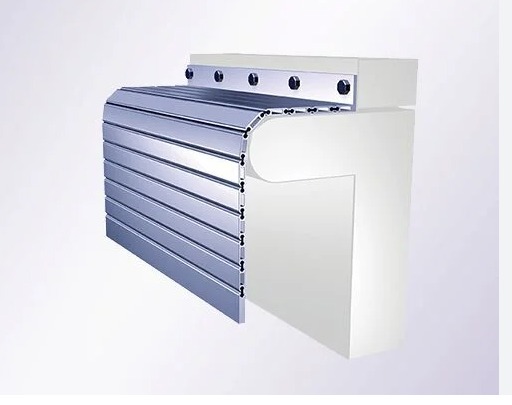 | APRON COVER Effectively engaged in offering a vast collection of outstanding quality products which include Apron Covers. View product → |