
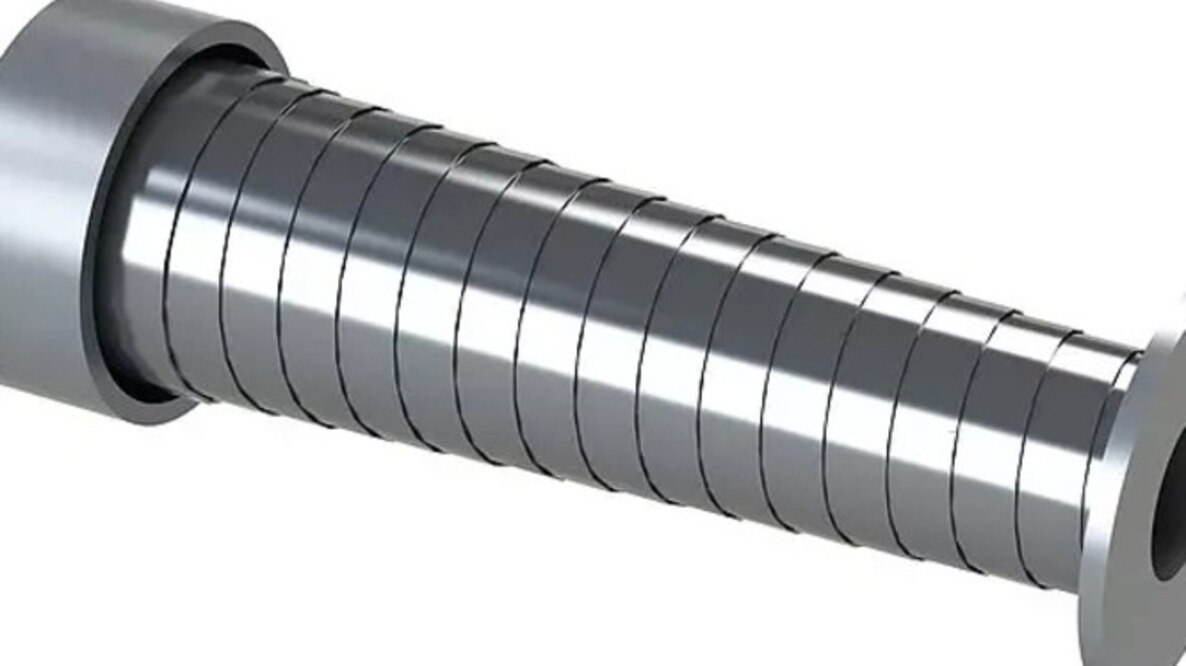
A laser-machine telescopic cover is a moving mechanical assembly, not automatically a complete enclosure, safety guard or controls package. By checking its sections, movement hardware, wipers, dimensions, operating limits and exclusions, you can compare quotations on the same scope and identify what your machine builder must provide.
Key takeaways
- Ask for overlapping leaves, guide systems, wipers and mounting hardware.
- Specify every protected axis, travel length, closed height and operating speed.
- Set material, coolant, chip, heat and bellows-clearance requirements in writing.
- Choose a bellows or hybrid cover when telescoping leaves cannot fit.
What parts are included in a laser-machine telescopic cover assembly?
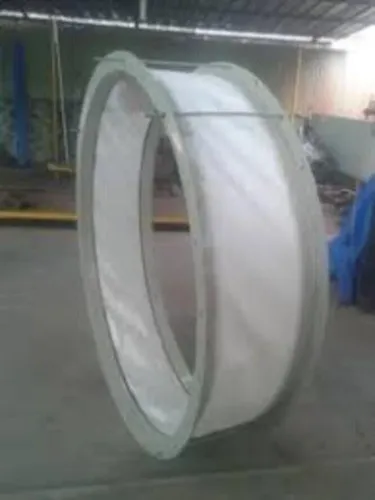
A laser-machine telescopic cover assembly normally consists of overlapping formed steel box sections or leaves that collapse into a short package and extend over the exposed axis.
Check that the quotation lists these telescopic cover components:
- Formed steel sections, their overlap, and inter-section stops
- Guide rails or machined guide surfaces
- Rollers or sliding shoes
- Scrapers and replaceable wiper strips
- Mounting flanges, brackets, fasteners, and lubrication points
Drain channels, inspection openings, special heat shields, interlocking features, and bellows sections are application-dependent. Do not treat them as automatic inclusions.
Wipers are wear parts because chips, hot dross, smoke residue, coolant and repeated friction damage their sealing edge. A laser application may need two wiping stages: a primary scraper to remove coarse debris and a secondary wiper to limit fine dust and smoke residue entering the sections.
A “complete cover” does not automatically include machine-side brackets, guideway modifications, sensors, coolant plumbing, electrical interlocks, cable carriers, controls, or installation labour. For telescopic cover inclusions for laser machines in Ahmedabad, require an inclusion-and-exclusion schedule naming each item.
Ask the supplier to state whether special heat shields, limit devices, replacement wiper sets, shipping crating and commissioning are included. Treat “complete cover” as incomplete until every inclusion and exclusion appears in the quotation.
Which laser axis and machine parts must the cover protect?
Define the protected axis before selecting a cover: state whether it is X, Y or Z, then name the platform—fiber-laser cutting table, CO2 laser, laser welding machine or another machine. A cover sized for one axis can leave another guideway exposed.
Identify the exact moving parts inside the protection zone:
- Linear guideway and bearing blocks
- Ballscrew, rack-and-pinion or linear-motor components
- Encoder scale or read head
- Cable route and other moving-axis hardware
- Exposed surfaces facing hot dross, sparks, fine metal dust, smoke residue or occasional molten particles
| Machine area | Protection question | Possible cover arrangement |
|---|---|---|
| Cutting-table axis | Which guideway faces dross and sparks? | Telescopic steel sections over the exposed rail or ballscrew |
| Welding axis | Where can molten particles and smoke settle? | Steel sections with heat-resistant wiping and sealing |
| Neighbouring axis or complex region | Does the same cover reach every exposed part? | Steel cover on one guideway plus bellows over the adjacent region |
For telescopic cover inclusions for laser machines in Ahmedabad, define each protected region on the drawing. State where the fixed end, moving end and cover limits sit; otherwise a supplier may protect one rail while leaving an encoder or parallel axis open.
A telescopic steel assembly is mechanical protection, not automatically a laser-radiation safety guard or complete enclosure. Keep the machine’s documented risk assessment responsible for guarding, access control, apertures, structural integrity, interlocks and laser-safety controls; confirm separately whether sensors, cable carriers and safety interlocks are included.
Which dimensions, materials and operating limits belong in the specification?
A comparable design needs telescopic cover specifications that define the envelope, motion, materials and duty—not only the required travel.
- Record retracted or closed length, extended length, usable stroke, overall width, height, number of sections, section pitch and overlap.
- State mounting orientation, available installation envelope, mounting points, allowable moving weight and collision clearances.
- Provide travel speed, acceleration, cycle frequency and the complete axis motion profile, including rapid moves, dwell periods and reversals.
Closed length is the packed dimension; it is not the usable stroke. A short closed package achieved by reducing section overlap can lose stiffness, sealing margin and resistance to particle entry.
| Dimension | Specify | Why it matters |
|---|---|---|
| Closed versus stroke | Closed length, extended length and usable stroke separately | Prevents an undersized package or insufficient travel |
| Material schedule | Steel grade or sheet thickness, section geometry, surface treatment, coating or finish | Enables comparison of strength, corrosion resistance and cleanability |
| Operating schedule | Temperature range, vibration or load limits, permissible chip size and hot-debris resistance | Exposes failures caused by dross, impact or machine motion |
The material schedule must confirm compatibility with coolant, oil, cleaning chemicals, smoke residue and abrasive metal dust. The operating schedule must state actual limits rather than “heavy-duty” wording.
Treat wipers as replaceable specification items: list material, profile, contact arrangement, replacement method and temperature compatibility. Include resistance to coolant, abrasive dust and cleaning agents, and specify multiple wiping stages or scrapers where one strip cannot exclude fine laser dust and hot debris.
How should the cover move, and when is another cover type better?
The fixed end anchors to the machine frame; the moving end follows the laser axis and opens toward the exposed guideway. Adjacent sections overlap through the stroke, running on guides, rollers or sliding elements, with limit stops preventing over-travel and collision.
Check the working arrangement for:
- Opening direction, section overlap and clearance from the axis, tooling and neighbouring covers.
- Parallel support and guide alignment; poor alignment causes racking and uneven extension.
- Roller or sliding-element access for lubrication, plus drains and openings for cleaning trapped chips.
- Acceleration and support against motor load; excessive force signals misalignment, debris or insufficient support.
- Stop positions that prevent section collision at both ends of travel.
| Cover type | Strength | Better choice when it fits |
|---|---|---|
| Telescopic steel | Resists impact, hot dross and heavy debris | The axis faces molten particles, chips or hard contamination |
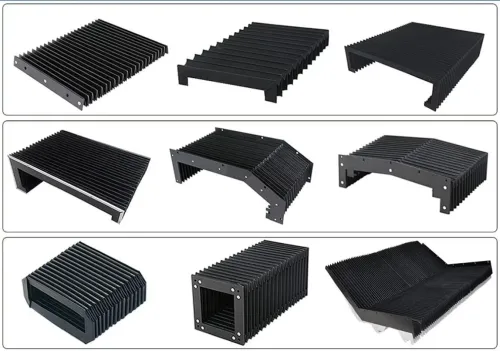
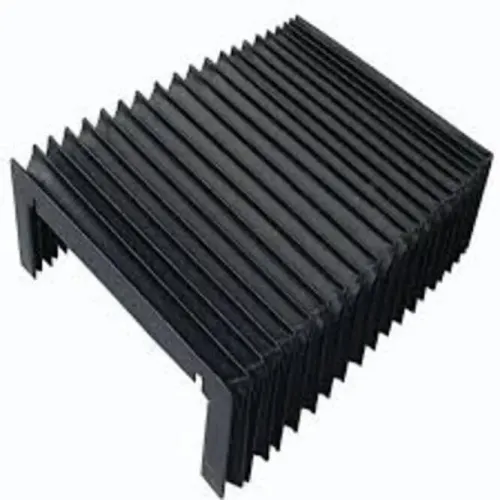
| Bellows | Low folded height, complex geometry and lower moving mass | Space is tight or the axis has irregular geometry |
| Roll-up cover | Compact packaging with limited rigid structure | Flexible coverage matters more than impact resistance |
| Apron cover | Durable overlapping protection | The path needs a simple sliding barrier |
| Brush-wiper arrangement | Light sealing and particle wiping | Contamination is light and access must remain open |
Each alternative becomes wrong when its folded package, heat or impact resistance, sealing behaviour, or maintenance access conflicts with the axis. Acceptance requires full-stroke cycling, measured closed and extended dimensions, smooth movement, continuous wiper contact, and inspection after representative debris or heat exposure. Static measurements alone will not reveal racking or excessive drive resistance.
What should a laser machine telescopic cover quote include?
A comparable laser machine telescopic cover quote starts with a controlled drawing, not a machine name. Include these details in the request:
1. Identify the laser type, protected X, Y or Z axis, guideway or moving part, drawing, closed and extended dimensions, usable stroke, mounting orientation, travel speed, acceleration, cycle frequency, installation envelope and available mounting points.
2. Request separate prices for the fabricated body, guide hardware, wipers, inter-section stops, mounting brackets, fasteners, special heat shields, sensors, limit switches, cable-management hardware, installation, commissioning, replacement wiper sets and shipping crating. Require a written list of warranty exclusions.
3. Require the offer to state steel grade, thickness, section construction, surface finish, wiper compound, operating temperature and load limits, cleaning method, lead time and acceptance tests. Tests should cover measured closed and extended dimensions, full-stroke cycling, smooth movement, continuous wiper contact, cleaning or drain access, and inspection after representative heat and debris exposure.
When comparing a telescopic cover supplier in Ahmedabad, ask for evidence of laser-generated heat and debris experience, local installation or service capability, replacement-wiper availability and material documentation. Made locally does not prove that the design matches your duty cycle.
SCUTES INDIA PRIVATE LIMITED can be assessed against this controlled scope rather than a vague “complete cover” description.
Put the mechanical cover in its own purchase section. Price and assign responsibility separately for controls, coolant systems, coolant-resistant cabling, cable carriers, sensors, limit switches and laser-safety interlocks.
Related products
 | TELESCOPIC COVERS A telescopic cover protects guide-way surfaces and components of moving axis of machines. View product → |
 | TELESCOPIC SPRING COVER Telescopic Spring Covers provide protection under extreme conditions. View product → |
Frequently asked questions
What parts are included in a laser-machine telescopic cover assembly?
The assembly includes overlapping formed steel leaves or box sections, guide and support components, wipers or scrapers, mounting brackets, stops and the hardware needed to attach the cover to the machine.
Which laser axis and machine parts must the cover protect?
Identify each exposed X, Y or Z axis, including guideways, ballscrews, racks, linear motors, cables, hoses, bearings and adjacent moving parts. Define the full travel and the areas exposed at both ends.
Which dimensions, materials and operating limits belong in the specification?
Record closed and extended lengths, width, height, section pitch, mounting points, travel speed, acceleration, cycle rate, temperature, coolant and chip exposure, material, coating, sealing method and allowable deflection.
What should a laser machine telescopic cover quote include?
Request a drawing with dimensions and mounting points, the number and material of sections, guide and wiper details, operating limits, finish, inspection requirements, delivery scope, exclusions, warranty and installation responsibilities.
Related product
 | Laser Machine Bellows Laser Machine Bellows are specialized protective coverings designed to safeguard the vital internal components of laser machines. View product → |