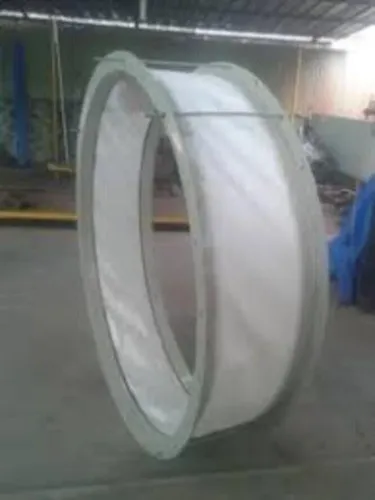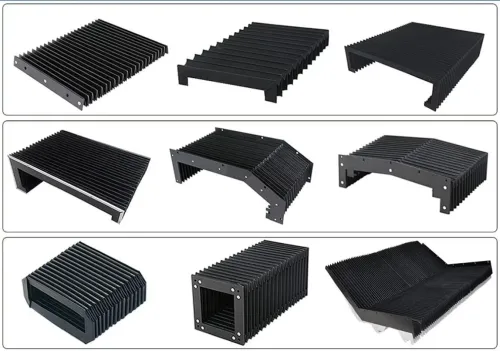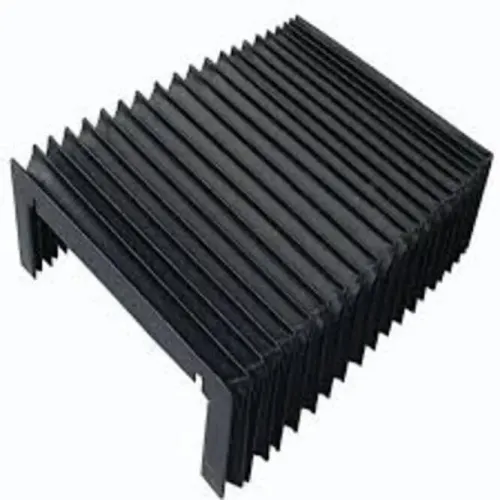

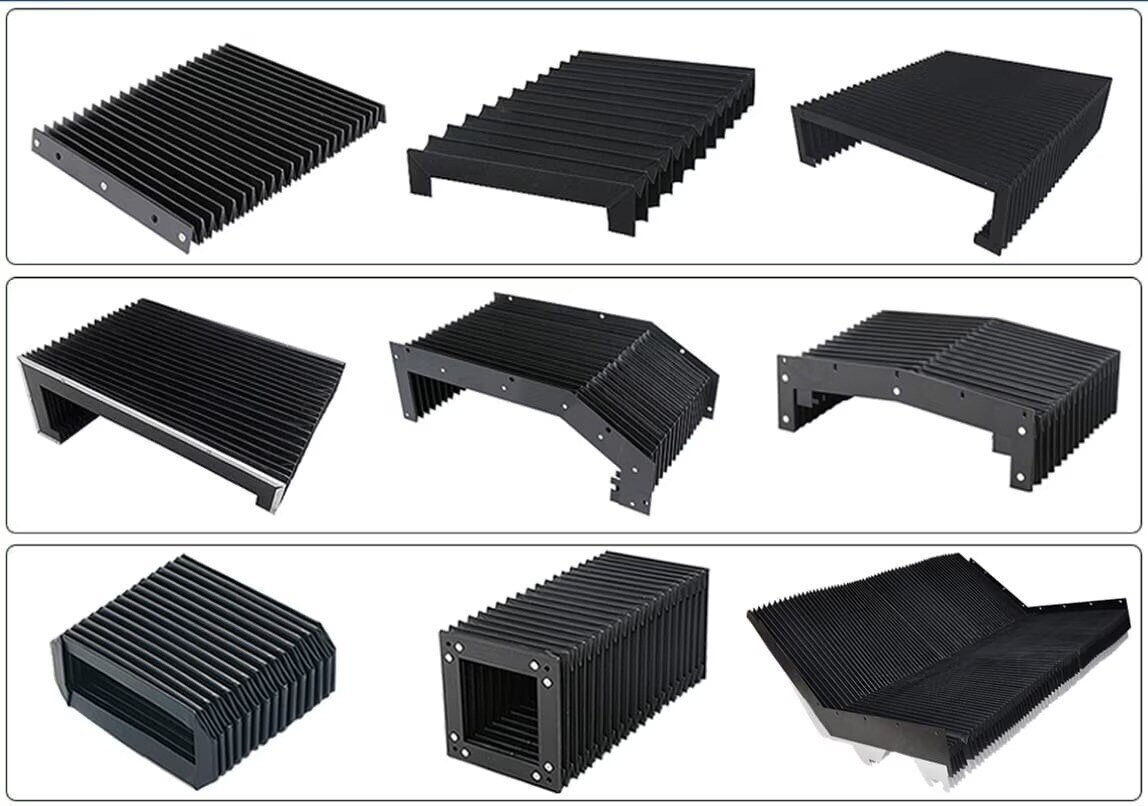
A monsoon-ready way cover must handle more than rain: wind-driven water, mud, airborne grit, coolant splash, standing water and repeated wet-dry cycles all affect the design. By the end, you will have a measurable specification, a guideway survey checklist and an acceptance-test plan that you can send to a supplier.
Key takeaways
- Separate stopped-machine rain protection from moving-axis protection.
- Measure the full axis travel, folded height and motion envelope before ordering.
- Specify drainage, wipers and corrosion control as one system.
- Test seals, movement and water drainage before approving a supplier.
Define the Monsoon Duty Before Choosing a Cover
Record the way cover weather conditions before choosing materials. Separate stopped-machine protection from moving-axis protection, then state exposure to direct or wind-driven rain, standing water, coolant splash, mud, abrasive grit, hot chips and alkaline cleaning fluid.
| Stopped | Record idle time while wet, temperature range and cleaning method | Include roof, chip-conveyor, cable-entry and lubrication-line leakage |
|---|---|---|
| Moving | Record travel during rain or splash, drainage and wiper contact | Confirm the guideway stays dry throughout axis movement |
Ahmedabad rainwater can carry dust, chlorides and urban deposits into joints; coolant is a different chemical and contamination duty. Define acceptance: water must drain visibly without pooling, and an agreed splash test must show no water reaching the guideway. “Suitable for monsoon” is not measurable.
Do not assign an IEC 60529 rating to a complete moving assembly without testing it installed. IP54 means limited dust ingress and splashed-water protection; IP65 means dust-tightness and water-jet protection. Neither rating covers telescoping motion, scraping loads, drainage or standing water. Include the actual test configuration, exposure, duration and acceptance record in the specification.
Match the Cover Design and Materials to the Axis
Horizontal, vertical, inclined and inverted guideways need different cover geometry. A moving way cover follows axis travel and excludes chips, coolant, grit and rain at the guideway; a general machine cover only shields equipment. Do not specify either by appearance alone.
| Type | Motion to follow | Best use |
|---|---|---|
| Telescopic steel cover | Straight, guided stroke | Chips, coolant and rain on horizontal or vertical ways |
| Roll-up cover | Flexible take-up along one axis | Light contamination and limited space |
| Apron cover | Sliding or hinged overlapping plates | Heavy chips, impact and awkward access |
| Bellows | Folding movement with flexible support | Inclined, three-dimensional or irregular travel |
| Spring cover | Compact guided retraction | Small strokes where folded height is critical |
For horizontal telescopic covers, provide sloped panels, low-point drains and clearance for debris; overlapping sections alone can hold standing water. Vertical and inclined installations need controlled drainage, gravity support and secure guides so panels do not sag or accelerate. An inverted way needs drainage away from the guideway.
Choose coated fabric for suitable flexible duties, stainless steel where corrosion exposure warrants it, prepared and coated mild steel for defined environments, and aluminium where weight and material compatibility permit. Use corrosion-resistant fasteners, sealed or treated cut edges and welds, and galvanically compatible metals.
Discuss the coating system against ISO 12944; salt-spray or cyclic-corrosion data compares coatings but does not predict service life in mixed rain, grit, coolant and trapped water.
Reject telescopic steel for severe impact, unusual three-dimensional movement, very low folded height, laser heat or abrasive fine dust. Bellows or an apron design may provide better way cover monsoon protection and machine cover rainy weather performance.
Measure the CNC Guideway and Motion Envelope
Before quotation, measure the guideway and the complete motion envelope, not just the outside length. For way cover specs for monsoon in ahmedabad, record:
| Item | Record | Why it matters |
|---|---|---|
| Guideway | Rail width, rail-to-rail spacing, guideway length | Sets cover width and support |
| Motion | Stroke, extended length, compressed or folded length | Confirms travel and packing |
| Envelope | Cover width, height and folded height | Prevents collisions during retraction |
| Installation | Mounting-face locations, mounting clearances and allowable orientation | Confirms attachment and drainage |
| Access | Space around the cover for cleaning and inspection | Prevents an unserviceable installation |
Also provide maximum travel speed, acceleration, cycle frequency and daily cycle count. These values affect panel loading, guide support, wiper force and fatigue.
Check interference at both ends of travel with:
- Tooling and workholding
- Chip conveyors and nearby guards
- Coolant lines, lubrication pipes and cable carriers
Require a scaled drawing or three-dimensional envelope review. Do not select a cover by extended length alone. Include photographs with a ruler, machine make and model, axis direction and mounting-face details.
Ignoring folded height is a common error: a cover that fits fully extended can strike the spindle, tool changer or enclosure when compressed.
Specify Drainage, Wipers and Corrosion Control Together
Rain and coolant need a drainage design, not just overlapping panels. For way cover monsoon protection, slope every horizontal surface, open drains at low points, leave no closed water pockets, and provide clearance for mud and chips to escape. Use gutters or overlapping sections where geometry requires them.
Check open ends, telescoping joints, mounting plates, wiper gaps and low points; a low telescoping section can retain water despite continuous panels.
Specify wipers by contact pressure or controlled interference. Excessive pressure raises axis drive force and wear; insufficient pressure admits water and grit. Confirm compatibility with the actual oil, coolant and cleaning chemicals, then define replacement intervals and wear allowance for machine cover rainy weather.
Material choice requires testing:
| Construction | Strength | Check before selection |
|---|---|---|
| Polyurethane | Abrasion resistance | Coolant, temperature and sliding-speed compatibility |
| Rubber | Flexible, economical | Do not assume compatibility with synthetic coolant or alkaline wash |
| Fluoropolymer-containing | Chemical resistance | Cost, temperature and required contact force |
For these way cover weather conditions, provide drainage, ventilation where appropriate, drying intervals and inspection after heavy rain or prolonged shutdown. Define panel, bracket and fastener material or coating, using ISO 12944 for coating selection; treat cut edges and welds. Inspect blocked drains, corrosion, hardened wipers, loose fasteners and galvanic attack.
Test the Proposed Assembly and Compare Ahmedabad Suppliers
Approve the assembly, not the brochure. A machine-cover supplier in Ahmedabad must complete a drawing review, dimensional confirmation, material traceability check and sample or prototype approval before production.
Send the supplier:
- Machine make and model, axis drawing, photographs, measured dimensions, travel, speed, acceleration, cycle rate and folded-height limit.
- Coolant type, chip size, guideway type, installation direction, site exposure, nearby chip flow and cleaning access.
Require written confirmation of:
- Replacement-part availability, installation support, warranty terms and monsoon response time.
- Which design data the supplier used and which tasks remain your installation responsibility.
Compare suppliers against the same evidence:
| Supplier evidence | What it confirms | What it does not confirm |
|---|---|---|
| Drawing review | Fit, mounting faces and motion envelope | Drainage during operation |
| Material traceability | Alloy, coating or fabric batch identity | Service life in Ahmedabad rain |
| Prototype approval | Actual movement and interference | Performance after untested changes |
| Warranty and response | Repair route and support timing | Automatic acceptance of failures |
Run full-axis dry cycling, then apply water or coolant splash. Observe low-point drainage, panel overlap, wiper leakage, noise, folded-height clearance and interference. Repeat enough cycles to expose rubbing, sticking and rising drive resistance; record machine condition and test fluid. Ask SCUTES INDIA PRIVATE LIMITED for this same evidence.
A continuous telescopic panel is not weatherproof, and a coating certificate proves neither drainage nor motion performance.
Related product
 | TELESCOPIC COVERS A telescopic cover protects guide-way surfaces and components of moving axis of machines. View product → |
Build Monsoon Inspection Into the Operating Routine
Set a recurring rainy-season inspection interval, then add inspections after heavy rain and whenever the machine remains idle while wet. Record the way cover weather conditions, including standing water, mud and coolant splash, rather than relying on “monsoon ready” wording.
| Inspection trigger | What to check | Immediate response |
|---|---|---|
| After heavy rain | Drains, overlaps, folds, seams, mounting plates and fasteners | Clear blockage and dry trapped water |
| After wet shutdown | Water marks inside, wipers and guideway entry points | Clean without driving grit into wipers |
| Defined weekly interval | Rust, coating, fasteners and wiper contact | Log defects and schedule replacement |
Remove mud and grit gently. A machine cover rainy weather routine must not push debris beneath the wipers. Replace a wiper when it is torn, hardened, permanently flattened, chemically swollen or no longer maintains controlled contact; confirm replacement lubricant suits both wiper and guideway materials.
Look for red rust, coating blistering, white corrosion on aluminium, galvanic attack and water marks. After flooding, isolate the machine and inspect guideways, bearings, lubrication paths and electrical interfaces before restarting.
Poor specification creates repeated cleaning, wiper replacement, corrosion seizure, alignment checks, downtime and collision-driven redesign. Avoid choosing by length alone, sealing without drainage, placing rainproof fabric near hot chips, over-tightening wipers or assuming a general cover protects a moving guideway.
Frequently asked questions
Which way cover weather conditions must you record before ordering?
Record direct and wind-driven rain, standing water, coolant splash, mud, abrasive grit, hot chips and alkaline cleaning fluid. Also separate exposure while the machine is stopped from exposure during axis movement.
How do you match a way cover design to a CNC axis?
Match the design to travel length, speed, acceleration, mounting space, bend radius, chip temperature, coolant exposure and the axis orientation. Horizontal, vertical and inverted axes place different demands on drainage and support.
What measurements are needed for a CNC guideway cover?
Measure usable guideway length, maximum travel, closed and extended cover lengths, folded height, width, mounting-hole positions, clearance to moving parts and the complete motion envelope.
What should you test before selecting a machine cover supplier in Ahmedabad?
Test smooth movement across the full stroke, seal contact, drainage, resistance to coolant and cleaning fluid, fastener security, noise and clearance. Ask suppliers for drawings, material details, inspection records and a trial-fit plan.