
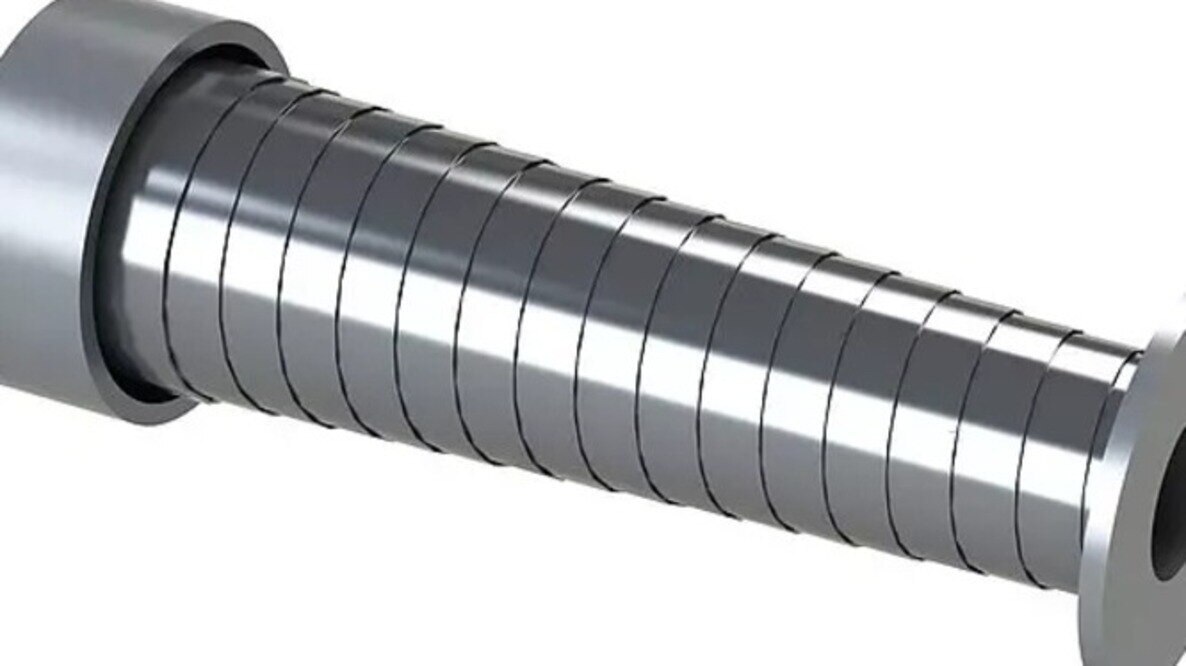
Start with the machine’s duty, axis travel, coolant exposure and chip load rather than an annual calendar reminder. By the end, you will have a safe cleaning and inspection sequence, clear warning signs for a spiral spring, and a practical brief for obtaining the right maintenance support in Ahmedabad.
Key takeaways
- Inspect by axis duty, stroke count, chips, coolant, and acceleration.
- Clean cover joints without forcing chips and coolant into sliding gaps.
- Treat spiral springs as stored-energy parts during inspection and removal.
- Give suppliers axis dimensions, travel, speed, load, and failure symptoms.
Set the inspection interval from machine duty, not the calendar
Inspect a telescopic cover and its spiral spring at every shift change when the axis handles abrasive chips, coolant, high acceleration, or frequent strokes. Record the axis travel and stroke count; a calendar-only annual inspection can miss damage that develops within days.
For telescopic cover maintenance in Ahmedabad, use these starting intervals and shorten them after any defect, leak, or abnormal noise:
- Clean, low-duty service: visual inspection each week and a detailed inspection every 250 operating hours.
- Horizontal covers exposed to chips or coolant: visual inspection each shift and detailed inspection every 50 to 100 operating hours.
- Vertical covers, high-speed axes, heavy chip loads, or coolant entering the overlaps: inspect at each shift and after any crash, jam, or unusual impact.
- Monsoon humidity, airborne dust, hot operating conditions, and coolant contamination: inspect more frequently if corrosion, sticky travel, or blocked drainage appears.
At every check, look for bent box sections, damaged wipers, distorted overlaps, loose fasteners, blocked drain holes, cracked seals, corrosion, and jerky extension or retraction. Check the spiral spring externally for rubbing, uneven winding, broken turns, kinks, or reduced return force; do not open its cassette or release its preload.
After each detailed inspection, record photographs, operating hours, stroke conditions, and defects, then set the next interval by the worst finding. A supplier’s recommendation is useful only when it states the interval in shifts, strokes, or operating hours.
Clean the cover without driving contamination into its joints
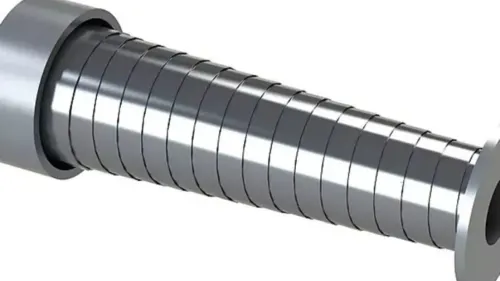
Start with isolation: stop the machine, shut off electrical and hydraulic or pneumatic energy, and apply lockout procedures. Good spiral spring cover care also means treating the spring as stored energy; do not open, cut, drill, heat, release, or disassemble its cassette until it is positively restrained and the supplier’s removal procedure is available.
- Move the axis to a position that exposes the cover safely, then secure any section that could shift. Never stand on the cover or use it as a work platform.
- Remove loose chips and sludge from the top, overlaps, guide tracks, drain paths, and wiper lips with an industrial vacuum, soft brush, or non-damaging scraper. Do not blast compressed air into overlaps or wipers; it drives contamination into the joints.
- Wipe coolant residue from the sheet sections, then inspect for bent boxes, distorted overlaps, cracked seals, damaged wipers, corrosion, loose fasteners, blocked drain holes, and rubbing marks.
- Open or remove sections only as the cover manufacturer specifies. Keep hands clear of the spring mechanism and do not disturb its seating, winding, or preload during routine cleaning.
- Apply only the specified lubricant, in the stated quantity, to the stated guide, roller, or wiper points. Excess grease traps abrasive chips and can increase drag.
- Restore guards and fasteners, remove tools, release the lockout under site procedure, and jog the axis at low speed. Check smooth extension and retraction, even overlap, drainage, abnormal noise, and leakage before returning to production.
Inspect the spiral spring as a stored-energy component
Treat the spiral spring as loaded even when the telescopic cover is stationary. To maintain telescopic cover for spiral spring in Ahmedabad, inspect it in its installed and positively restrained condition; never create a release or rewind opportunity just to examine hidden turns.
Isolate and lock out electrical, pneumatic and hydraulic energy, then prevent axis movement with the machine’s approved blocking method. Keep hands clear of the spring path, and obtain the cover or cassette supplier’s removal procedure before loosening any retaining part.
- Photograph the cassette, spring strip, shaft, guides and mounting points before touching anything.
- Look through accessible openings for broken turns, cracks, kinks, corrosion, polished rubbing marks, uneven winding and strip edges climbing out of their track.
- Check for a spring that sits off-centre, has shifted on its mandrel, or contacts the cassette wall; do not push it back by hand.
- Compare the cover’s documented closed position, extension and return behaviour with its normal condition, without manually pulling, rewinding or releasing the spring.
- Stop the inspection if the cassette is distorted, a retaining fastener is loose, the spring has lost seating, or stored force is uncertain.
- Replace, rather than straighten or splice, a damaged spring using the specified strip material, thickness, width, winding direction, cassette arrangement and preload.
Do not open, cut, drill, heat or disassemble the cassette until positive restraint is verified. Record the finding and ask a qualified technician for spring-force or preload checks; outside diameter alone is not a safe replacement specification.
Match movement symptoms to the failed cover component
After isolating power and securing the axis, treat any new movement symptom as evidence of a cover fault—not as harmless noise. Do not jog the machine to “see if it clears”; continued travel can turn a worn wiper, roller or spring problem into bent cover boxes and damaged guideways.
| Symptom | Likely failed component | What to inspect after shutdown |
|---|---|---|
| Jerky travel | Roller, guide, overlap or excessive chip buildup | Look for bent boxes, packed chips, seized rollers and dry or contaminated contact points. |
| Rattling | Loose fastener, roller, guide or distorted box | Check mounting bolts, roller bearings, guide strips and overlap clearances for looseness or impact marks. |
| Uneven extension | Bent box, blocked guide, damaged wiper or unequal spring winding | Compare both sides for parallel movement; inspect overlaps, wiper contact and spring seating. |
| Snap-back | Spiral spring losing control, broken turn or incorrect cassette seating | Do not open the cassette. Check for sudden tension loss, broken turns, kinks or rubbing only under the supplier’s restraint procedure. |
| Coolant leakage | Cut, hardened, deformed or missing wiper; open overlap or blocked drainage | Follow coolant tracks behind the wiper lip and inspect contact pressure, overlap gaps and drain holes. |
A cover can travel smoothly while a wiper still leaks abrasive coolant. Replace the failed wear part rather than adding heavy grease; excess lubricant traps chips and increases drag. Record photographs and the exact symptom before requesting parts.
Give an Ahmedabad maintenance supplier a specification they can verify
Provide a machine-cover maintenance supplier in Ahmedabad with a drawing, operating data, contamination details and photographs; a supplier that asks only for the cover’s outside dimensions cannot specify the job safely.
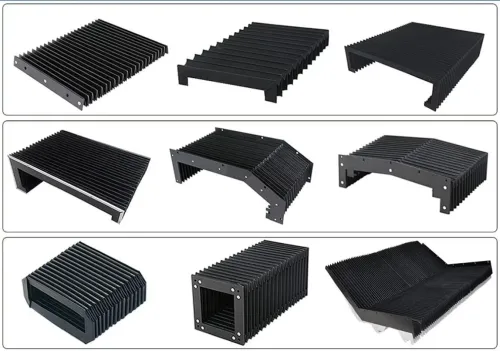
- Cover type, machine axis, mounting orientation, travel, closed length, extended length, width and height.
- Operating speed, acceleration, operating hours and axis travel per shift.
- Coolant name, concentration, temperature, chip type and chip volume.
- Exposure to Ahmedabad dust, hot operating conditions, seasonal humidity and monsoon water.
- Wiper and overlap photographs, including damaged seals, blocked drainage holes, corrosion and distorted sections.
- Spiral-spring material, strip thickness, strip width, winding direction, mandrel or cassette arrangement and specified preload.
- Spring serial number or drawing number, replacement-part identification and the next recommended inspection interval.
| Evidence to require | What it verifies | Reject if |
|---|---|---|
| Inspection report with measurements | Actual wear, alignment and clearance | It says only “clean” or “serviceable” |
| Photographs of wipers and overlaps | Sealing and contamination paths | Images show only the exterior |
| Spring-cassette procedure | Controlled stored-energy handling | The quote instructs you to open it casually |
| Parts list and interval | Correct replacement and follow-up | It matches a spring by outside diameter alone |
SCUTES INDIA PRIVATE LIMITED can help compare a replacement cover or spring specification against the existing installation, but the supplier must confirm fit, preload and mounting details before work begins.
Do not approve grease as a cure for stiff travel. Require the specified lubricant, quantity and application points, plus a restrained removal procedure before anyone releases, cuts, drills, heats or dismantles a spring cassette.
Related products
 | TELESCOPIC SPRING COVER Telescopic Spring Covers provide protection under extreme conditions. View product → |
 | TELESCOPIC COVERS A telescopic cover protects guide-way surfaces and components of moving axis of machines. View product → |
Frequently asked questions
How often should you inspect a telescopic cover and spiral spring?
Set the interval from machine duty. Inspect at every shift change when the axis handles abrasive chips, coolant, high acceleration, or frequent strokes, and record axis travel and stroke count.
How do you clean a telescopic cover without damaging its joints?
Remove loose chips first, wipe sections with a suitable cloth, and keep compressed air away from sliding joints unless you control the airflow so contamination is not driven inside.
What safety precautions apply when inspecting a spiral spring?
Treat the spiral spring as a stored-energy component. Isolate and lock out the machine, prevent axis movement, and do not release, remove, or straighten the spring without the correct restraint and service procedure.
What information should you give an Ahmedabad machine-cover supplier?
Provide the machine and axis, cover dimensions, travel, closed and extended lengths, speed, acceleration, stroke count, coolant and chip conditions, mounting details, and the movement symptom or failed component.